Published January 7, 2012 11:00AM
How to Prep and Cook with Fresh Pineapple
High in fiber and beta-carotene, tropical pineapple is a flavorful addition to many dishes. Learn how to select and prep this sweet wonder fruit.
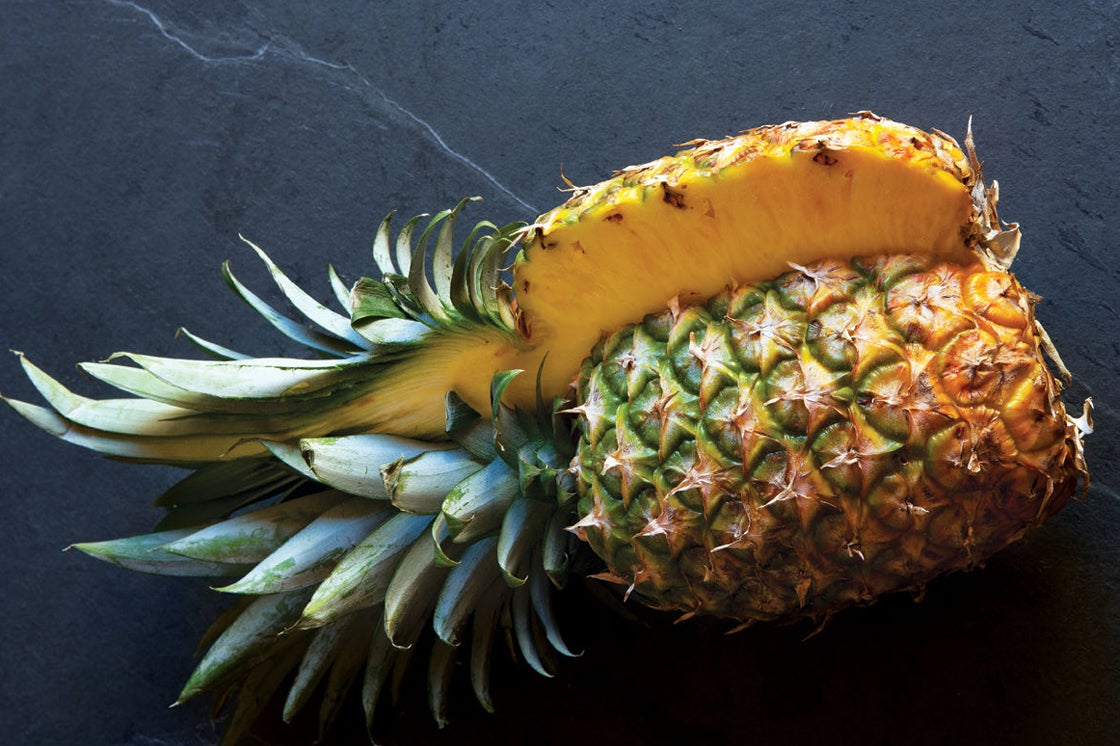
Take a recipe, any recipe, add pineapple, and presto! You’ve got a dish with sweet-tart tropical flavor that offers a hint of the exotic. From Hawaiian-style fried rice to a sunny cobbler, the following recipes show how the spiky, scaly fruit can make simple dishes taste special.
Nutritional Profile
1 cup raw pineapple chunks contains the following:
- 82 calories
- 2 g fiber
- 79 mg Vitamin C
- 180 mg potassium
- 1.5 mg manganese
- 30 mcg folate
Choose a Good One
- LOOK: A ripe pineapple is vibrantly colored and gold or bright yellow near the base. Scales should be uniformly sized. Deep green leaves are a sign of freshness; avoid fruit with brown, withered leaves, dark spots, or wrinkles.
- TOUCH: Gently squeeze the fruit to find one that is slightly yielding to the touch, not mushy, and feels heavy for its size.
- SMELL: A ripe pineapple has an aromatic, subtly sweet smell. If it smells too sweet, there is a good chance the pineapple is past its prime and has begun to ferment.
Learn more about vegan cooking and fruit and veggie prep. Join Chef Mark Reinfeld for our new online cooking course, Vegan Fusion: Essentials of Plant-Based Cuisine.
How to Prep a Pineapple
Cut off the top of the pineapple 1/2 inch below the crown, then slice off 1/2 inch from the bottom. Stand pineapple upright, and slice off the skin, working from top to bottom all the way around the fruit, making sure to remove the tough brown eyes. Quarter the pineapple lengthwise, then cut out the light-colored core. Cut the fruit into cubes, wedges, or slices according to the recipe.
Pineapple Types
While the pineapple family comprises more than 1,000 varieties, there are three cultivars you’re most likely to find in the United States:
- SMOOTH CAYENNE. Golden flesh, long leaves, and a sweet-tart flavor
- RED SPANISH. Brownish skin and pale, fibrous flesh
- GOLD BRIGHT. Yellow, extra-sweet flesh and higher vitamin C content
Recipes featuring fresh pineapple: